
Finding the money for a home
The short version
Most buyers put together their down payment and closing money from more than one place.
- Everyday extras. Coffee out, lunches, delivery, subscriptions and nights out are small on any one day, but over a year they often come to thousands of dollars. Keeping part of that money is a steady way to build savings, and you choose which extras matter most to you.
- Card interest. The average rate on credit card accounts that pay interest is 22.36%. Every dollar of interest is a dollar that does not go toward a home.
- A savings account that earns interest. The money you keep can earn interest while it builds. Savings rates change, and banks set their own. The national average rate on savings accounts is 0.38%, while high-yield accounts often pay more, so the rate is worth comparing.
- Gifts. Family can give part or all of the down payment on most loans, with a signed gift letter and a clear paper trail.
- Down payment assistance. It is usually a loan secured by a second lien on your home, and only sometimes a grant. We compare your options with and without it before anyone applies.
VA and USDA loans need no down payment for buyers who qualify. With either one, the money to save for is closing costs and a cushion.
Many rural addresses in Southwest Colorado fall inside USDA's eligible areas, so a loan with no down payment may be open to you even if you are not a veteran. Rural purchases also bring early costs, such as earnest money, a well water test and a septic inspection, so plan the first few thousand dollars before you make an offer.
Go deeper
What everyday extras add up to
Small amounts are easy to overlook because no single one feels large. For example, $5 a day on coffee and drinks out is $1,825 a year, and $12 for lunch out on each workday is $3,120 a year. Together that is $4,945, about a third of a $15,000 down payment, 5% on a $300,000 home.
None of these extras is wrong. The goal is to choose. Keep the ones that matter most to you, cut others in half, and move what you keep into savings on the day you are paid, so it is set aside before it is spent.
Card interest works against savings
At 22.36%, a $3,000 card balance costs about $56 a month in interest, or about $671 a year (Federal Reserve G.19, August 2026). Paying a balance down keeps that money for you.
Card balances also matter to a lender. Each card's minimum payment counts in your debt-to-income ratio, and high balances can lower your credit score. Ask us before you pay a balance off with money you have saved, because the same cash may be needed at closing. We can show you which use of the money helps your loan the most.
Savings that earn interest
A high-yield savings account adds interest to your balance each month, and the next month's interest is figured on the larger balance. For example, $500 a month saved at an example yield of 4% grows to $19,091 in three years, $1,091 of it interest. At the national average rate of 0.38% (FDIC, October 2026), the same savings earn about $100. Saving toward $15,000, the example yield reaches it in month 29 instead of month 30.
Savings rates change, and banks set their own, so the yield in this example is not a rate anyone is offering. Keep the money in an insured bank or credit union account rather than in cash, so a lender can document where it came from. Money in investments can fall in value just before closing.
Gifts, assistance and loans with no down payment
Gifts. On a conventional loan for a one-unit home you will live in, the whole down payment can be a gift from a relative or someone with a long-standing, family-like relationship. FHA, VA and USDA also allow gifts, each with its own rules. The giver signs a letter stating the amount and that no repayment is expected, and the lender documents the money as it moves.
Down payment assistance. Most assistance is a loan secured by a second lien on your home, repaid when you sell or refinance, and only some of it is a grant. The first mortgage that comes with it can also cost more. We show you each option with and without assistance before anyone applies, so you know what it costs and what you would owe.
No down payment. A VA loan needs no down payment with full entitlement. USDA loans need no down payment for buyers within USDA's income limits buying in an eligible area. Closing costs still apply, and sellers can pay some of them on every loan type.
See it with your numbers
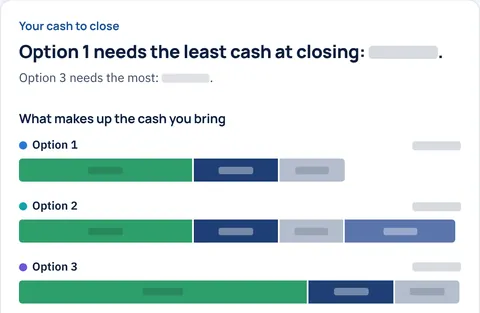
Your Mortgage Plan shows the cash to close for each option, so you know the amount to save for, and how a gift or assistance would change it.
Back in your Mortgage Plan, see this with your own numbers.
Your next step
Step 5 of 14Are you a first-time buyer?A first-time buyer usually means no home owned in the past 3 years. It allows 3% down on a conventional loan and can require a homebuyer class.Go to step 5Leave the path: I will need help with the down paymentI am a veteran or service memberShow me the next step
Sources
- FDIC: national rates and rate caps
- Federal Reserve G.19: commercial bank interest rate on credit card plans, accounts assessed interest
- Fannie Mae Selling Guide B3-4.3-04: personal gifts
- Fannie Mae Selling Guide B5-5.1-02: Community Seconds
- VA: funding fee and closing costs
- USDA: single family housing guaranteed loan program