
Getting pre-approved
The short version
A pre-approval is a lender's written statement of how much it will lend you, based on your credit report and your documents. It shows sellers that your offer is serious, and it shows you your budget before you choose a home.
Lenders use "pre-qualified" and "pre-approved" in different ways, so ask what was checked. A strong letter comes after a credit report, an automated underwriting approval and a review of your pay stubs, W-2s or tax returns, and bank statements.
A pre-approval is not a loan commitment. The home still has to appraise and pass the lender's review, and your finances need to stay steady until closing.
Comparing lenders has little effect on your credit. Mortgage credit checks made within a short window, 14 to 45 days depending on the scoring model, count as a single inquiry.
In Southwest Colorado, the property itself can change the loan. A USDA pre-approval assumes an eligible address, and manufactured homes, large parcels, cisterns or hauled water can narrow the lenders who will make the loan. Let us know what kind of property you are looking for, so your letter fits the homes you will actually tour.
Go deeper
What to gather
- Pay stubs covering the last 30 days
- W-2s for the last two years, plus any 1099s
- Two years of tax returns if you are self-employed or earn commission, rental or other income
- The last two months of statements for every bank, investment and retirement account you will use, every page
- A photo ID
- A short note on any large deposit that is not payroll
- Veterans: we can usually obtain your Certificate of Eligibility online, and a DD-214 helps
Sending everything at once helps. Complete statements, with every page included, keep a file moving.
Pre-qualified, pre-approved, approved
Pre-qualified often means an estimate from what you told the lender, with nothing verified. Pre-approved should mean your credit report was ordered, an automated underwriting system reviewed the file, and someone read your documents. The CFPB notes that lenders use these words differently, so what was checked matters more than the label.
Approved comes later, once there is a specific home. The underwriter reviews the contract, appraisal and title, then lists any conditions. When those are met, you are clear to close.
Neither letter is a guarantee. Both rest on assumptions that must hold until closing.
What a good letter shows
A useful letter names the loan type, the price or loan amount, and how long it is valid.
Ask for a letter written for each offer's price rather than your maximum. That way, the seller sees that you qualify for this home without seeing how much higher you could go.
Letters and the documents behind them age. Credit reports, pay stubs and statements each expire after a set time, so if your search runs longer than a couple of months, expect to send updates and receive a new letter.
See it with your numbers
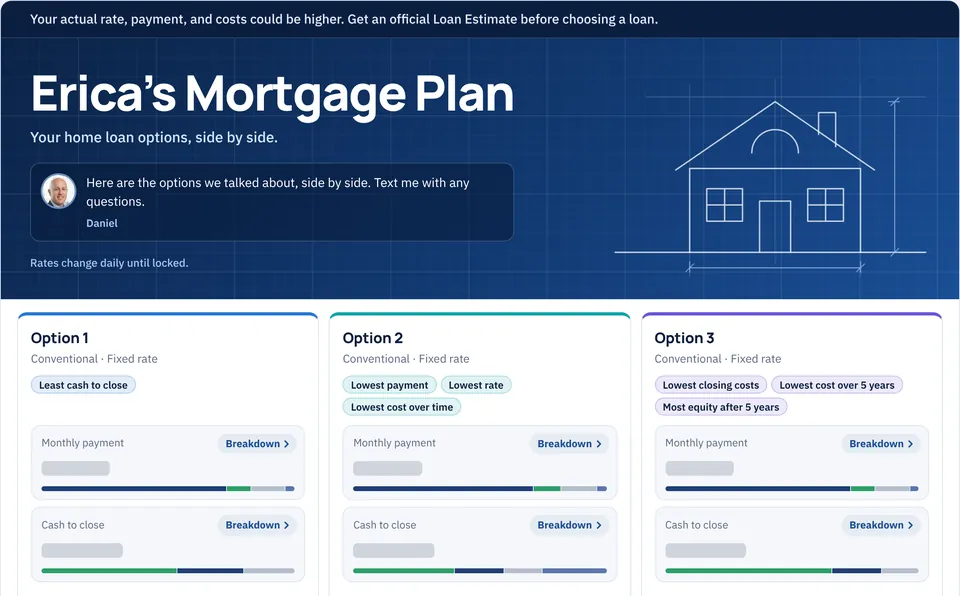
Your Mortgage Plan shows your qualifying ratios (DTI) for each option, so you can see how much room each one leaves under the guideline.
Back in your Mortgage Plan, see this with your own numbers.
Your next step
Step 9 of 14Reading a Loan EstimateThe Loan Estimate is the same three-page form at every lender. Check the loan type, term, amount and rate lock first, then the costs on page 2.Go to step 9Previous step: Down payment assistance: what it really costs