Cash-out, or a second mortgage?
The short version
A cash-out refinance replaces your mortgage with a bigger one and pays you the difference. It is one loan and one payment, but it re-prices your entire balance at today's rate.
A home equity line of credit (HELOC) or home equity loan sits on top of your first mortgage. Only the new money carries the new rate. If your first mortgage has a low rate, a second can cost less overall, even at a higher rate.
The fair way to compare is the blended rate: the average rate on everything you would owe, weighted by balance.
- Conventional and FHA cash-out: up to 80% of the value of a one-unit home you live in
- VA cash-out: can go higher under VA rules, can refinance a non-VA loan, and has no monthly mortgage insurance; for eligible veterans it is often the best way to take cash out
- Second mortgages: each lender sets its own limit on total borrowing
Go deeper
How a HELOC works
A HELOC is a credit line secured by your home. During the draw period, often around 10 years, you borrow as you need and usually pay on what you have used. Then the repayment period starts, when you cannot borrow more and payments are often much higher.
Most HELOCs have a variable rate, so the payment can change month to month. Some let you convert part or all of the balance to a fixed rate. If your home's value drops significantly, the lender can freeze or reduce the line.
A home equity loan is simpler: one lump sum, a fixed rate and a set payoff schedule.
The blended rate, worked through
For example, suppose you owe $250,000 at a low rate and need $50,000.
- Cash-out: all $300,000 moves to today's cash-out rate.
- Second mortgage: $250,000 stays at your current rate, and only $50,000 is at the second's rate.
Weight each rate by its share: five-sixths at your current rate, one-sixth at the second's. If that blend is below the cash-out rate, the second costs less in interest. With a variable-rate HELOC, also ask what happens if its rate rises, and whether you will pay it down or carry it for years.
Waiting periods and qualifying
- Conventional cash-out: you have been on title at least six months, and the mortgage being paid off is at least 12 months old.
- FHA cash-out: generally, you have owned and lived in the home for 12 months, with on-time payments.
- VA cash-out: you must live in the home, and it can replace a non-VA loan.
All of them need an appraisal and full income and credit approval. Ask a tax professional before you rely on a deduction; IRS rules limit when home equity interest is deductible.
Matching the tool to the job
- A one-time project with a known cost: a home equity loan or a cash-out gives a fixed amount at a set rate.
- Costs that come in stages, or an emergency reserve: a HELOC lets you borrow only what you use.
- Paying off credit cards or a car: it can lower the rate, but it turns unsecured debt into debt tied to your home, often over a longer time. Compare the total interest, not just the payment.
See it with your numbers
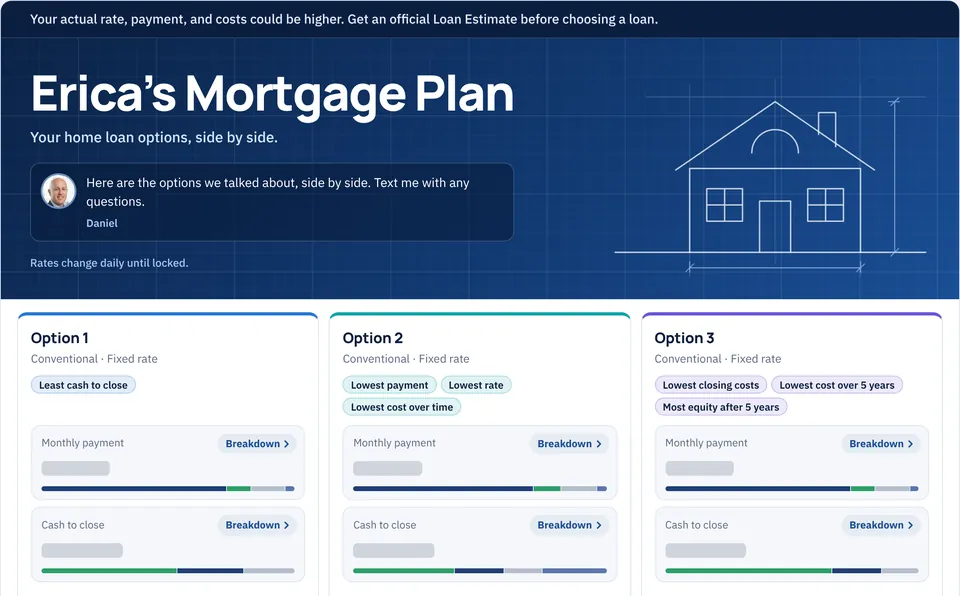
Your Mortgage Plan can compare a cash-out refinance with your current loan: the payment, cash to close, cost over time and break-even. For a HELOC or home equity loan, Daniel can walk you through the blended rate.
Already have a Mortgage Plan? Open your link, or text Daniel.
Back in your Mortgage Plan, see this with your own numbers.