Manufactured homes
The short version
Manufactured homes can be financed with conventional, FHA, VA and USDA loans when they meet a few requirements:
- Built after June 15, 1976, under HUD's code, with the HUD data plate or labels
- On a permanent foundation, often certified by an engineer
- Titled together with the land as real property, with the hitch, wheels and axles removed
- Never moved from the site where it was first installed, for most loans
- For Fannie Mae, at least 12 feet wide and 400 square feet
Pricing and lender options vary more for manufactured homes than for site-built ones, which makes comparing lenders more valuable. Tell us at the start that the home is manufactured, rather than after the appraisal.
Many manufactured homes on land in the rural parts of the region were installed years ago, and some have additions or older foundations. If you are considering one, ask for the data plate, labels and any foundation certification before your inspection deadline. An engineer's visit at that stage costs less than a loan that fails later.
Go deeper
Paperwork that makes or breaks it
Two things prove the home was built to HUD's code. The data plate is a paper sheet, usually inside a kitchen cabinet, closet or utility room. The certification labels are metal tags on the outside of each section. Fannie Mae will not purchase the loan if neither the originals nor an acceptable replacement can be produced.
The home's vehicle-style title also must be retired, so the home and land are one piece of real estate. A title company can tell you whether that has been done. If it has not, it can usually be corrected before closing, but it takes time.
Foundations and additions
Most loans call for an engineer to certify that the foundation meets HUD's permanent foundation standards. The engineer examines the piers, anchors and perimeter, and the letter goes to the appraiser and the lender.
Additions, porches and decks are common. Some are acceptable. Others raise questions if they are attached to the home in a way the manufacturer did not plan for. USDA is the strictest on changes, especially for existing homes. If the home has an addition, tell us early.
Newer homes built like site-built houses
Fannie Mae's MH Advantage and Freddie Mac's CHOICEHome cover manufactured homes built to higher standards, closer to site-built houses. Features include a permanent masonry or poured perimeter foundation, a covered porch, a driveway and sidewalk, and gutters.
These homes can qualify for higher loan-to-value limits, standard mortgage insurance and better pricing than other manufactured homes. If you are buying new, ask the dealer whether the home carries the label.
See it with your numbers
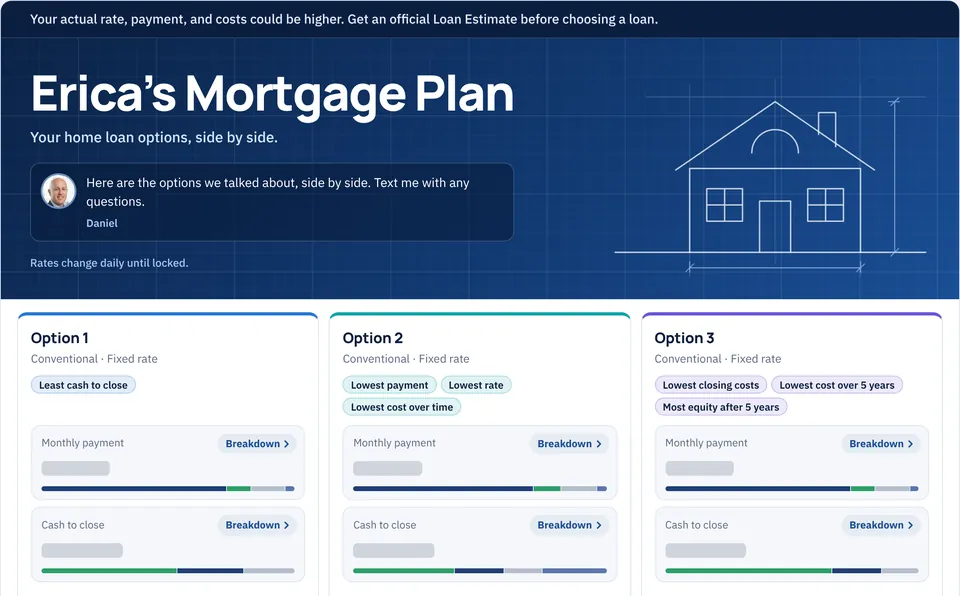
Your Mortgage Plan compares the loan options that accept the home, with the payment and cash to close for each.
Already have a Mortgage Plan? Open your link, or text Daniel.
Back in your Mortgage Plan, see this with your own numbers.