
Will it pay off? The break-even
The short version
Refinancing has costs. The question is how quickly the savings pay them back.
Closing costs ÷ monthly savings = months to break even.
For example, if you would pay $4,000 in costs and save $150 a month, the break-even is about 27 months. If you will keep the loan longer than that, the refinance likely pays off.
Two things can make the simple math misleading:
- The new term: a new 30-year loan can lower the payment while allowing more years of interest. That is the longest it can run, not how long you have to take.
- Costs rolled into the loan: you pay nothing at closing, but you owe more, and you pay interest on the costs.
A new 30-year term does not mean 30 more years of payments. It sets the longest the loan can run, not how long you have to take. Keep paying what you pay today, and the difference goes to principal, so at the lower rate the new loan can be paid off on or before the date your current loan would end. In the tool below, tap "Keep today's payment" to see the payoff date on your numbers.
Go deeper
Compare the right numbers
Compare principal and interest plus mortgage insurance, old against new. Leave out taxes and homeowners insurance, because they do not change with a refinance.
Count only true costs: lender fees, appraisal, title and recording. Leave out the new escrow deposit and prepaid interest. The escrow money is yours, and your old escrow balance comes back after payoff.
If the refinance removes mortgage insurance, that saving counts. If it adds mortgage insurance, that cost counts too.
The "skipped payment" myth
Mortgage interest is paid in arrears: each payment covers the month before it. When you refinance, you may not owe a payment the next month, but that month is not free. The interest for that time is in your old loan's payoff and in the prepaid interest on the new one.
It may feel like a skipped payment. It is actually a shift in timing, and it should not count as savings in your break-even.
Paying costs, rolling them in, or a lender credit
- Pay at closing: this gives the lowest balance. The break-even is the plain math above.
- Add them to the loan: you pay no cash today but carry a higher balance. Your savings shrink a little each month.
- Lender credit: you take a slightly higher rate in exchange for the lender covering costs. Your break-even can be immediate, though your monthly savings are smaller.
The best choice depends on how long you will keep the loan. The longer you stay, the more likely it is that paying costs upfront is the better choice.
See it with your numbers
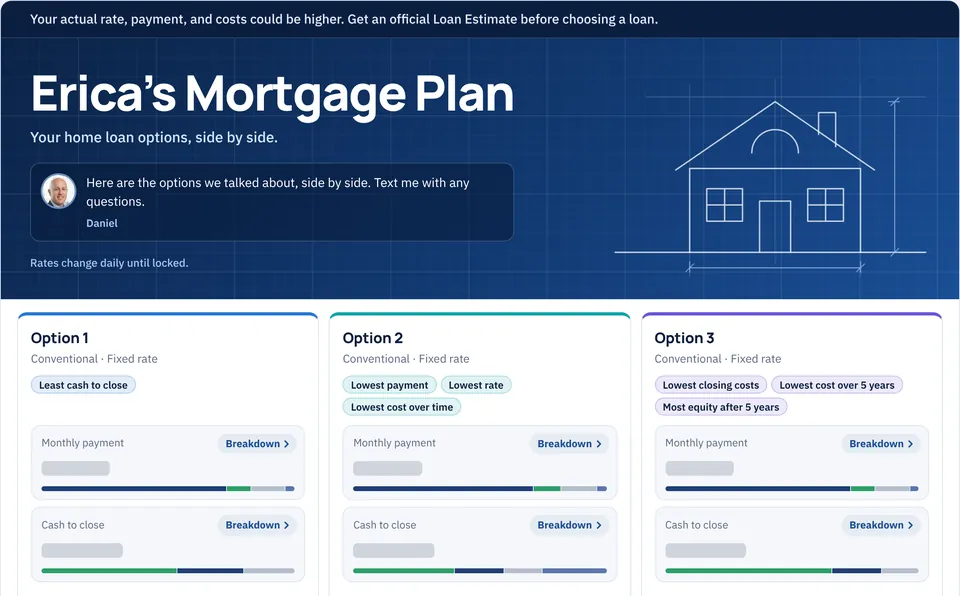
Your Mortgage Plan shows the refinance break-even and the cost over 3, 5, 7 and 10 years for each option.
Already have a Mortgage Plan? Open your link, or text Daniel.
Back in your Mortgage Plan, see this with your own numbers.
Your next step
Lesson 6 of 8 in OwningStreamline refinancesFHA, VA and USDA streamline refinances need less paperwork and usually no appraisal. Each has a waiting period and a test that the new loan helps you.Read the lessonOr go another way: I want cash out too